
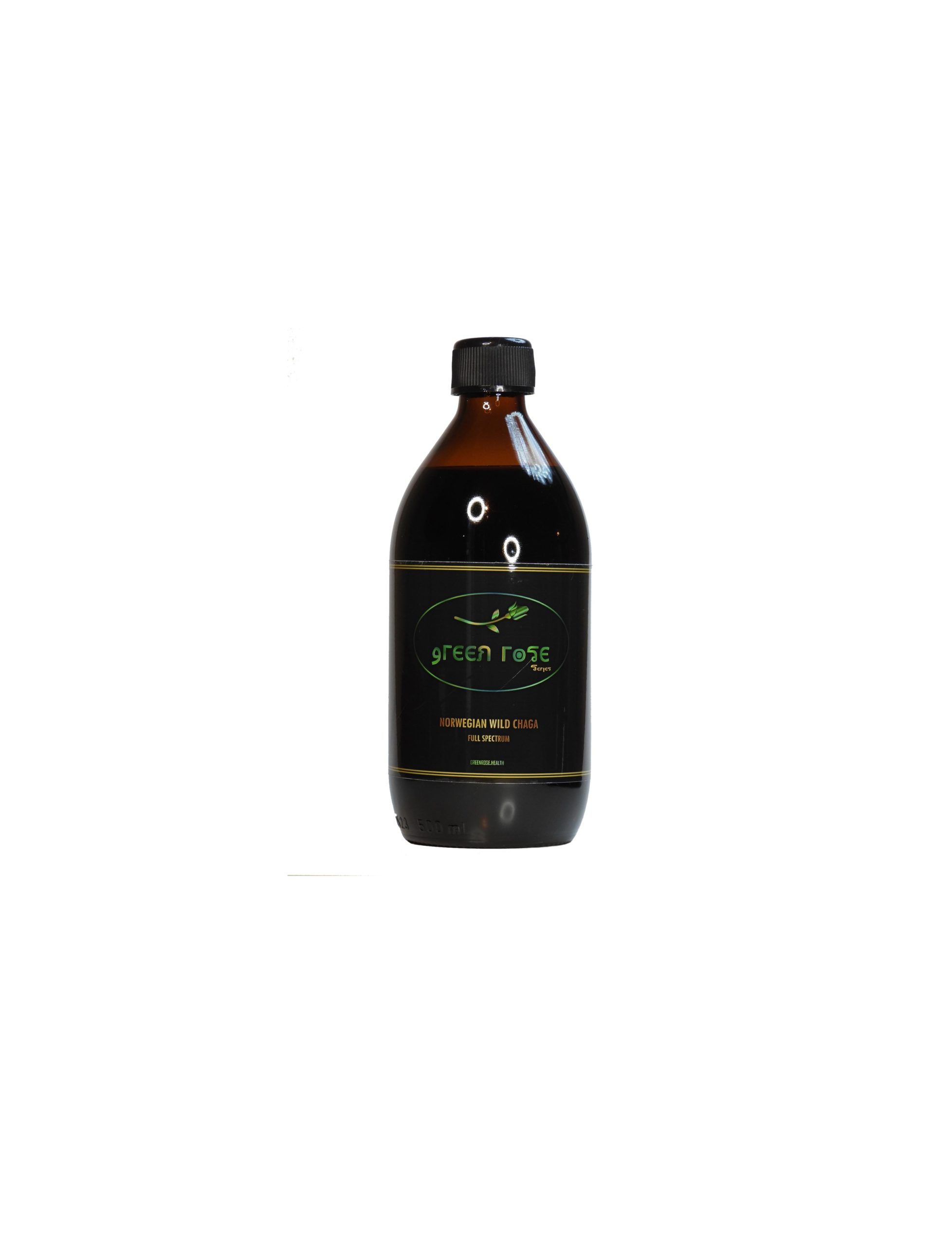
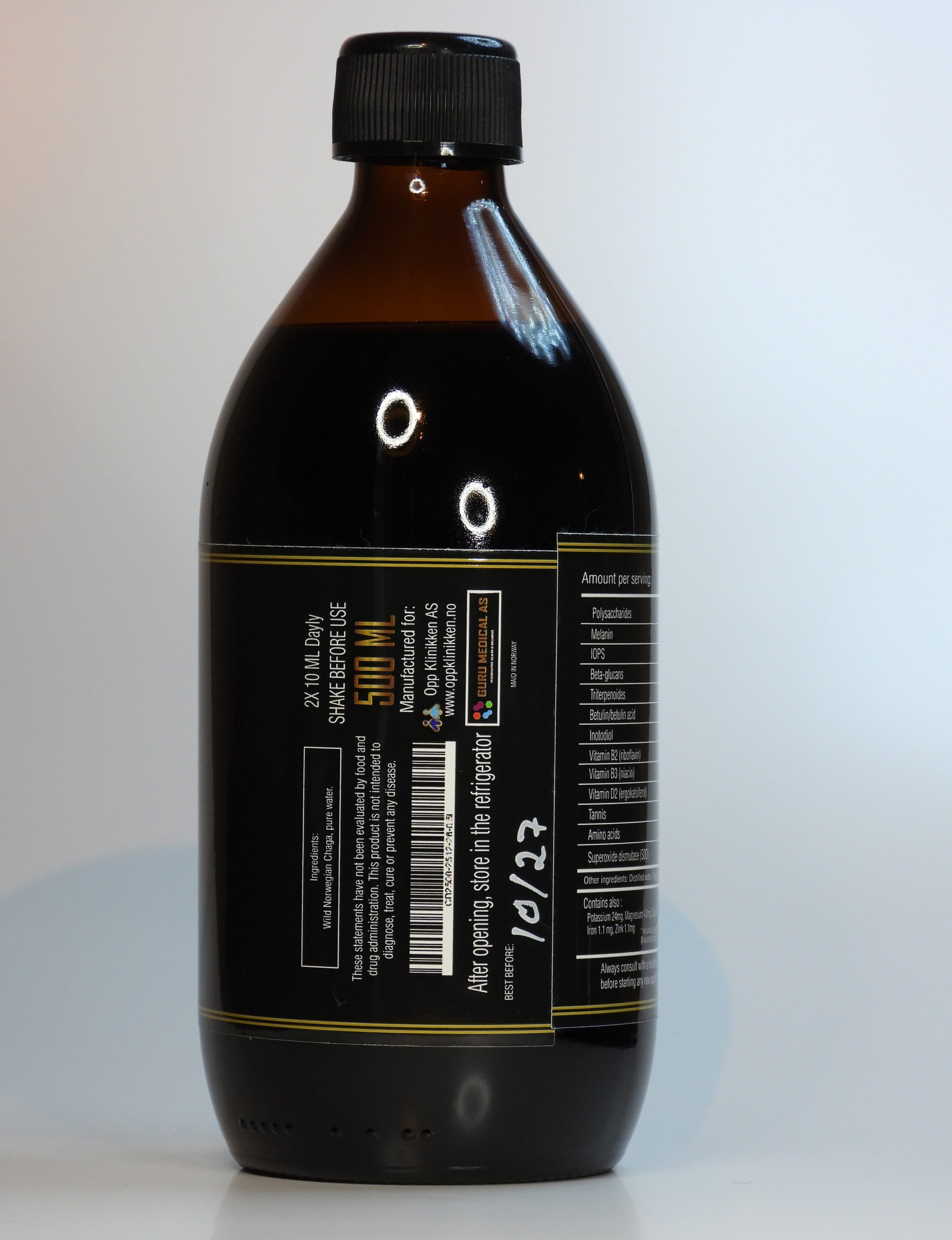
kr 1,750.00
Chaga is one of the most powerful natural antioxidants known. Of all medicinal mushrooms, chaga likely has the greatest diversity of medicinal properties.
It is an adaptogen that is immunomodulating, anti-cancer, anti-tumor, genoprotective, generally strengthening (tonic), blood-purifying, blood sugar-lowering, pain-relieving, digestion-supporting, liver-supporting, anti-inflammatory, antibacterial, and antiviral.
Chaga mushroom is a parasitic fungus in the Hymenochaetaceae family that grows on trees. It has an irregular shape and looks like burnt charcoal. Chaga mushroom is a mass of mycelium, mostly black due to large amounts of melanin. Chaga has a circumboreal distribution and grows in birch forests in Scandinavia, Eastern Europe, Russia, Korea, and the northern parts of North America. In Norway, chaga is widespread throughout the country but is rarely found in large quantities.
The recommended daily dosage is about 1/2 teaspoon.
However, it is important to listen to your body and what feels good for you.
It is often recommended to drink about ½ liter (up to three small cups) daily, but remember to start gently (e.g., with one cup daily) and not overdo the intake of the tea before you have experienced how the body reacts to it.
Chaga has a slightly bitter, coffee-like taste. Chaga tea is surprisingly good, and the taste can somewhat resemble regular black tea or coffee.
If you want to make a cup of “cozy tea” with chaga, the dosage can be one teaspoon of dried and finely chopped mushroom/powder to ½ liter of water. If you want to make a stronger tea with a more potent effect, one tablespoon of the mushroom/powder to ½ liter of water may be sensible. To avoid having to boil chaga tea every day, you can boil several liters of extra strong tea (use more mushroom/powder relative to water than indicated above) and store it in the refrigerator or freezer. If the tea is to be frozen, it should be put in plastic bottles that are not filled all the way up (to avoid the bottles cracking when the tea freezes and expands). In the refrigerator, chaga tea keeps for several weeks. When you then want to enjoy a cup of chaga tea based on such a concentrate, you can fill a cup ¾ full with boiling water and then top up the cup with the concentrated chaga tea. This way, the tea gets the right temperature and strength.
When preparing chaga tea, it is ideal to boil the mushroom in a pot made of glass or enamel, but it also works well to use a stainless steel saucepan (never use aluminum saucepans for herbal teas!). The tea should be boiled with a lid on so that valuable substances do not evaporate. If desired, the taste can be adjusted by adding a flavorful herb such as ginger.
After straining the liquid from the mushroom after boiling, you can add new water to the mushroom in the saucepan and boil it again once or twice, or until the liquid no longer gets a dark brown color. This way, you optimally utilize the valuable mushroom. Remember that for the second and third boilings, you should use less water than the first time so that the tea does not become too weak.
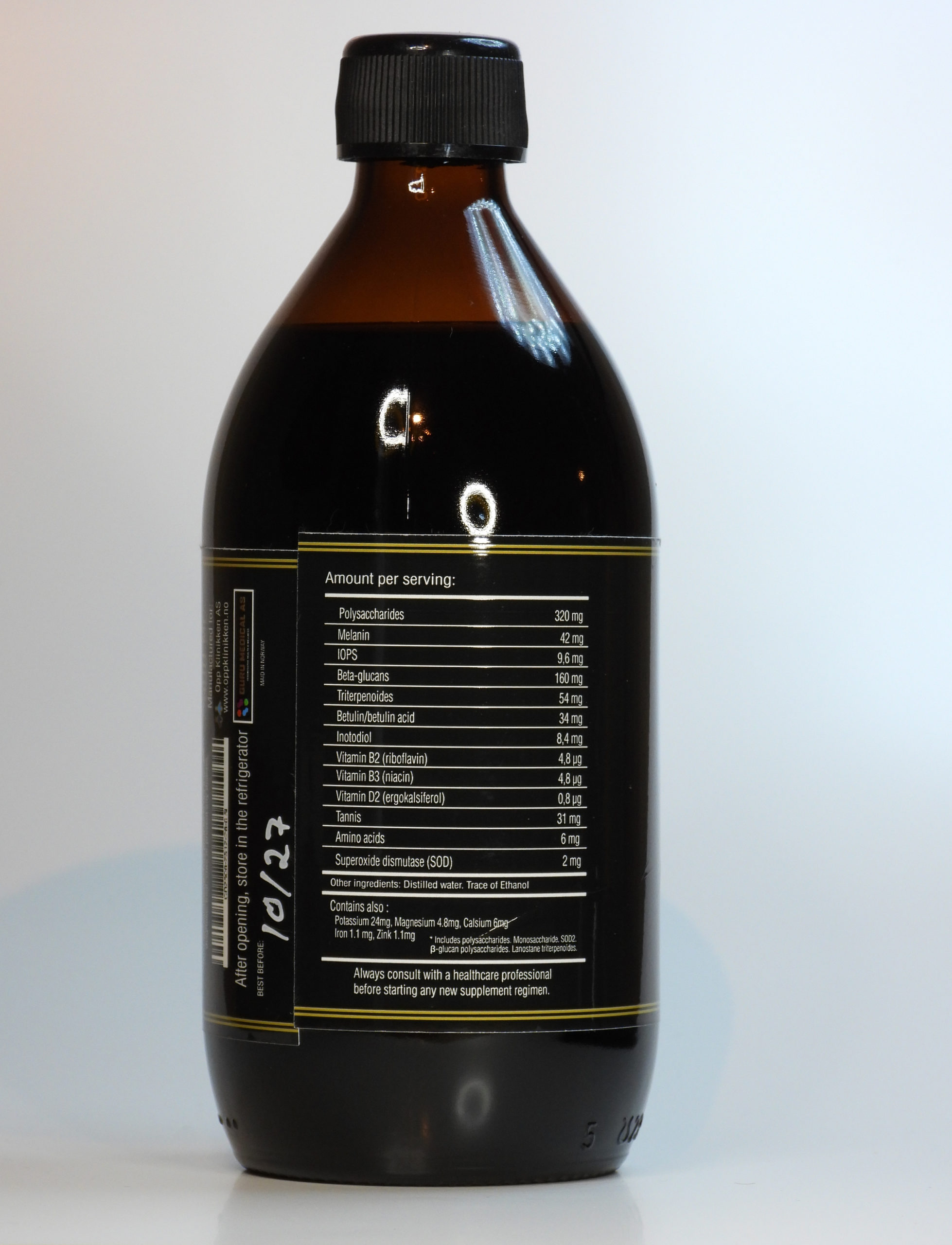
Chaga contains a range of important compounds and nutrients: Polysaccharides (both water-soluble, alcohol-soluble, and protein-bound), beta-glucans (which are also a form of polysaccharides), lanostane triterpenoids, betulin (and metabolites betulinic acid and lupeol), ergosterol peroxide, lanosterol, the enzyme superoxide dismutase (SOD), inotodiols, triterpene saponins, melanin (a black pigment), tannins, important minerals (calcium, potassium, magnesium, iron, phosphorus, zinc, silicon), trace minerals (copper, manganese, germanium, cesium, rubidium, antimony, barium, bismuth, boron, strontium), vitamins (B2, B3, D2), dietary fiber, and an almost complete amino acid profile except for isoleucine. The content of the various minerals varies greatly depending on geographical areas. Chaga contains very high amounts of germanium and zinc compared to the content in various foods. Betulin (and betulinic acid) are medically active substances from the birch tree that become concentrated in the black outer layer of the chaga mushroom, which contains about 30% betulin.
As far back as the 1500s, there are records showing that chaga mushroom has been used as tea and a “strengthening remedy.” In the past, some people in Russia drank a brew made from the mushroom daily, in the same way we drink coffee or tea.
Reports of the use of the mushroom also exist from Canada, North America, Finland, the Baltics, and other countries in Eastern Europe. The Nez Perce Indians in North America used the mushroom in pemmican. The Cree Indians used the mushroom as incense and as tinder when starting fires.
A decoction of chaga mushroom can be used as a substitute for hops (Humulus lupulus) in beer brewing. The tannins in the mushroom help give the beer a special flavor. Chaga can otherwise be used to dye textiles and paper, giving a yellow or sepia color depending on the mordant used.
Chaga has traditionally been used as a soap substitute.
In the form of “soap water,” it has been used by women to make a washing agent for external cleaning of the genitals during and after menstruation, to wash newborn children with, for a “ritual wash,” and as a soap substitute for washing hands and feet or the whole body. The soap water is made by burning the chaga until it is red and then putting the charred mushroom in hot water and stirring until it dissolves and the water turns black. This seems to be a parallel to the lye that was made here in the country from birch ash (so-called “støypelut”), which among other things was used as soap.